Increased Charges Causing Concern for Hauliers and Exporters
Our CEO Chris Smyth has spoken out about a concerning accumulation of new costs scheduled to hit the Irish haulage and export sectors from January 2026, warning that this combination of fees threatens to significantly erode Ireland’s international competitiveness. The issue, which our CEO raised with Ministers and TDs in the Dáil in early December, involves not just one, but a series of increases being introduced almost simultaneously across ports and shipping routes.
Three increases incoming
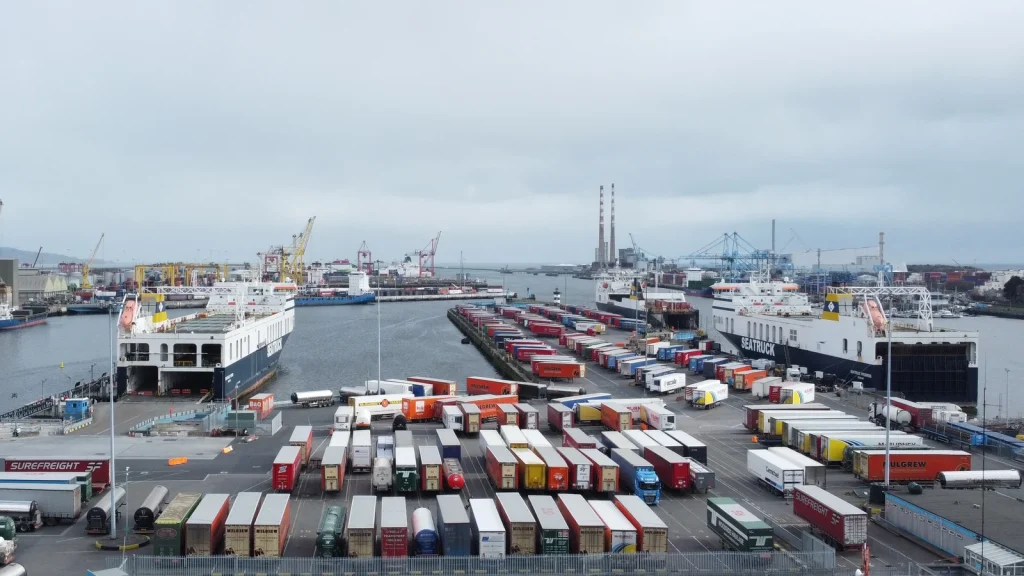
While the media spotlight has been on the new €15 infrastructure charge from Dublin Port, Chris has stressed that this is compounded by two other fee increase that will be introduced in 2026:
- Dublin Port infrastructure charge: A flat fee of €15 per trailer or container, intended to fund port infrastructure upgrades.
- Emissions Trading System (ETS) surcharge increase: The ETS charge, which applies to emissions from shipping, is set to increase its scope from 70% to 100% from January 1st. This marks a substantial jump in the environmental levy applied to all goods and trailers shipping from Ireland to the UK and mainland Europe.
- Ferry company increases: Ferry companies are also seeking general price increases for next year. For example, the estimated increases for a trailer on the Dublin to Cherbourg route alone are around €25
The bottom line for trade
The cumulative impact of these fees will place an unprecedented financial strain on every trailer entering and leaving the country.
Our CEO illustrated the scale of the burden:
- The increased ETS alone is estimated to add nearly €60 to the cost of a trailer going from Dublin to Cherbourg.
- When combined with the €15 port charge and the €25 ferry increase, this could result in a total additional cost of nearly €100 on that single route.
- Similarly, new costs on the Dublin to Holyhead route are estimated to be over €40, while the Dublin to Rotterdam route could see increases of over €65 per trailer.
“This is a substantial amount of money for any exporter or importer in Ireland. We are an island nation, and our colleagues and competitors in Spain, France, and Germany do not have these port charges, ferry costs, or environmental levies like SECAs and BAFs that we face. At some stage, we have to sit down and reassess the situation.”
Threat to competitiveness and jobs
The core concern is that these costs cannot be absorbed by transport companies, meaning they will inevitably be passed on to the end customer: the Irish exporter and manufacturer.
This surge in logistical costs directly impacts the final price of Irish goods, making them less competitive in key European and UK markets. Our CEO warned that this trend is already visible, with exports struggling due to rising costs.
“Transport companies are finding it difficult to survive, and strong companies like ours are doing our best but are forced to pass on costs every single day to our customers. If these port costs are brought in by Dublin Port, on top of the ferry costs, on top of the ETS costs, exporters will soon say they can’t keep doing this. That will lead to a loss of jobs in Ireland.”
Our company is calling for an urgent, collaborative dialogue between all stakeholders – ports, ferry operators, transport companies, manufacturers, and the government – to find a sustainable strategy that safeguards Irish trade competitiveness.